
Air Seat™ — Sit All Day Without Pain
Foam and gel push back on your tailbone. Air Seat takes pressure off.
✓ Relieves tailbone pressure instantly
✓ Doesn't pack down like foam
✓ Never gets hot like gel
✓ All-day comfort in any chair
BLACK FRIDAY EARLY ACCESS · 50% OFF MULTI-PACKS
Free shipping · 90-day guarantee
Limited stock left in November batch. Next batch: December 15.
November batch
Only 30 leftDue to high demand, limit 4 per customer. Ships within 24 hours.
Money-back guarantee starts the day it arrives

I’m 71 with a closet full of cushions that didn’t work. Figured this was one more. Took it to my grandson’s game and sat all nine innings for the first time in two years. That was July. Still full, still use it daily.
SIZE & WEIGHT
15.7 × 15.7 inches and 1.2 inches thin. Under a pound. You sit at almost the same height, so your desk, armrests and steering wheel stay where they are.
CARE & CLEANING
Let the air out, rinse it under the tap and let it air dry. There's no foam inside to soak up sweat or smell.
SHIPPING
Free tracked shipping from inside the US. Most orders arrive within 10 days. You get a tracking number by email when it ships.
RETURNS
Try it for 90 days, starting the day it arrives. If it doesn't take the pressure off your tailbone, email us and we refund every dollar, even if you used it.

They Tried Everything. Then They Tried Air.
Loved by 26,582+ people who sit for hours.
-

Good cushion
I am 74 and did not think air would be better than my foam cushion. It is. Had to let some air out the first day because it was too firm . Now I use it every night in my recliner and I don’t get stiff like I did before. Would recommend.
-

Works in my truck
Drive to see my son is about 3 hrs and I was stopping every hour to get out and stretch my back. Figured this thing would slide all over the seat. It doesn’t move. Made it there without stopping the first time and every time since. Looks like it came with the truck
-

My husband loves it
My husband always says his back hurting is from getting older. His doctor has been trying to get him on an air cushion that costs almost $700. I found this one and tried it, and it has been life changing for him. He’s been using it about 2 weeks and gets up out of his chair a lot easier now. He asked me to order another one for his truck, so I just did.


Why Sitting for Hours Hurts Your Tailbone
A few hours into sitting, your tailbone starts to hurt. You shift and lean to get off the sore spot.
By the end of the day it burns. This happens in a wheelchair, a truck seat and an office chair.
The cause is pressure.
When you sit, your weight rests on three small bones: your tailbone and your two sit bones. Your seat puts your weight on those bones for hours at a time.
Foam cushions feel good for a week and then go flat. Gel cushions feel cool for an hour, then get hot and slide. Donut cushions move the pain to a ring around the hole.
Foam pushes back when you press on it. It pushes back hardest where you press hardest. That spot is your tailbone.
Every foam and gel cushion works this way. It pushes on the sore spot until it goes flat.
You did not pick the wrong cushion. Foam and gel are the wrong material.

How the Air Cells Take Pressure Off Your Tailbone
This cushion has 49 air cells that are linked together.
When you sit, air moves out of the cells under your tailbone and into the cells around it. Your weight spreads across the whole cushion.
It does not pack down. There is no foam inside to wear out.
The cells shift when you lean, reach or turn. You stay level.
You set the firmness. Pump it up, then sit down and let air out until it feels right. You can do this while you sit.
Built for everyone who sits all day
Find your seat. It works on all of them.
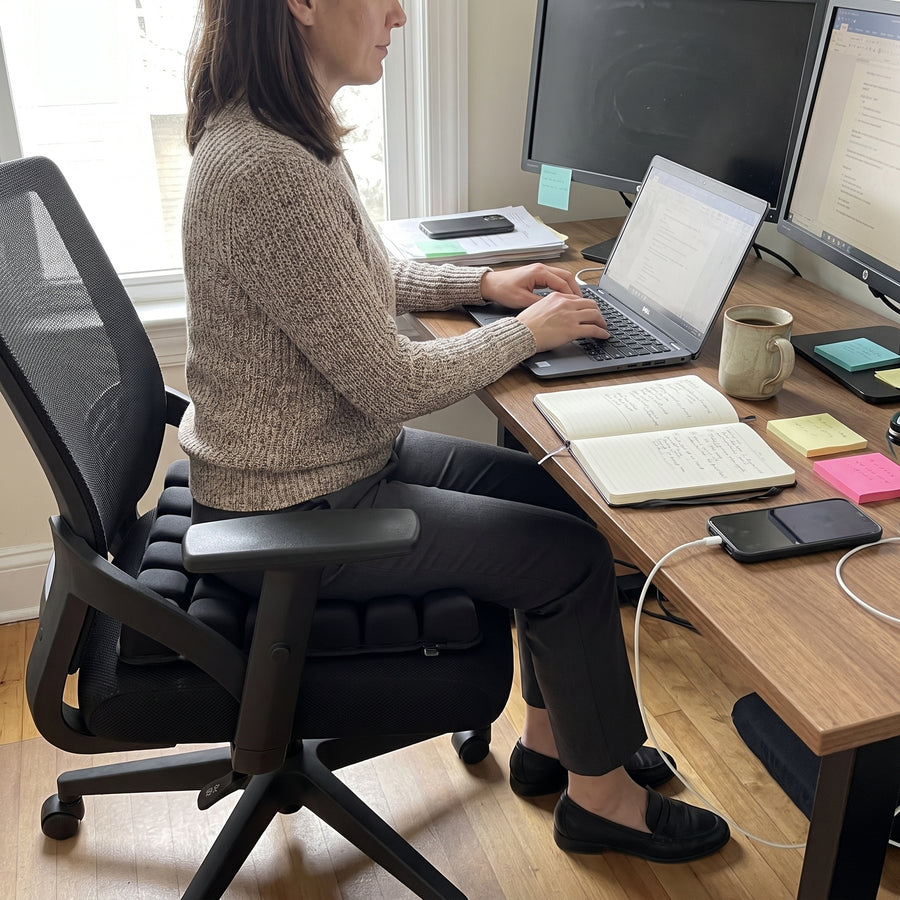
Eight hours in a desk chair builds pressure right under the tailbone. By the afternoon that means constant shifting, and standing up hurts.
Air Seat moves the weight off the tailbone, so the workday ends without the ache.
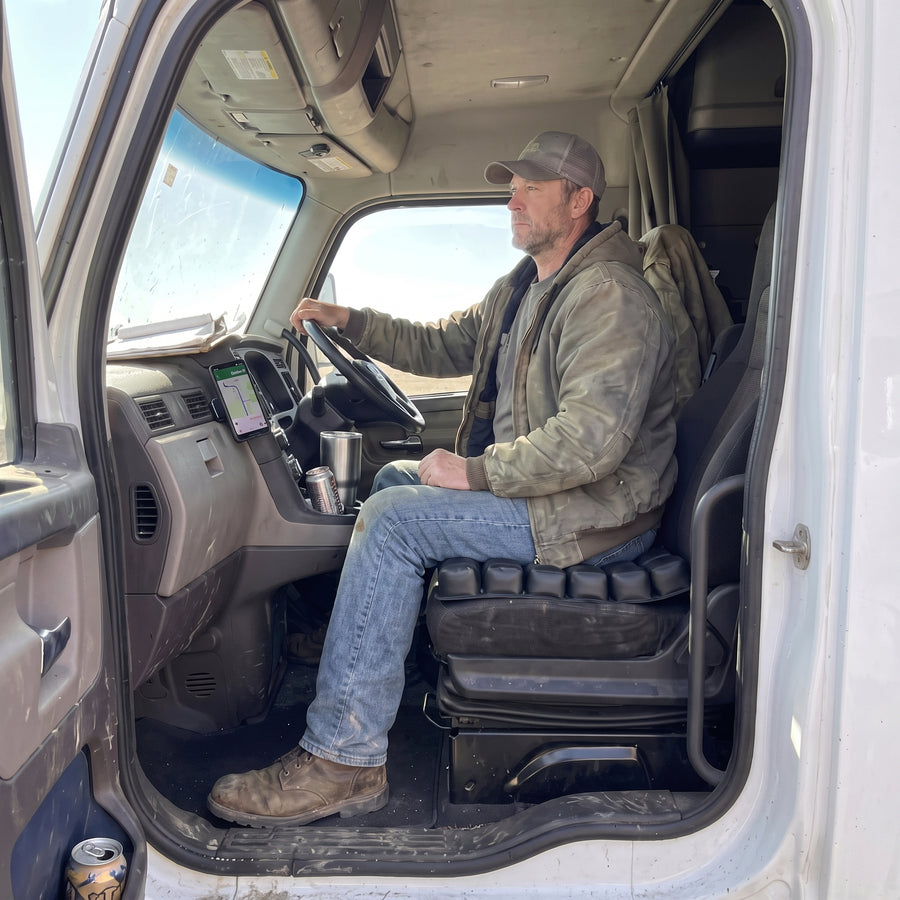
Ten or eleven hours in a truck seat stacks pressure on the tailbone, and by hour six most cushions have slid forward or gone flat.
Air Seat's non-slip base stays put when braking, and air doesn't pack down, so the full shift ends without the ache.

A full day in a wheelchair keeps pressure on the same spots from morning to night, and foam cushions flatten under it.
Air Seat's linked air cells keep shifting the weight, hold their air, and fit the chair already in use.

Recliners sag over the years, and the dip puts the weight on the tailbone and hips. After a show or two the ache sets in, and getting up takes a push.
Air Seat puts even support back on top of the worn seat, so evenings stay comfortable and getting up is easier.
Built to Work All Day
 1
49 Linked Air Cells
Air moves away from your tailbone every time you shift, so no single spot carries your weight.
 2
Cool and Non-Slip
Air flows between the cells, and the textured base grips the seat.
 3
Set Your Own Firmness
Press the corner cell to fill it. Tap the valve to let air out. Adjust it while you sit.
 4
Rolls Up and Travels
Under a pound. Let the air out, roll it up and take it to the car, the office or a flight.
Where does sitting hurt?
Pick the spot. See how Air Seat takes the pressure off it.
Tailbone
When you sit, most of your weight lands on your tailbone. The air cells move that weight across the whole cushion, so nothing digs in, and standing up doesn't hurt as much.
Lower back
Foam pushes back hardest under your tailbone, so you shift and lean to get away from it. Even support means you stop leaning.
Back of legs
Pressure on the back of the thighs builds over hours. Spreading your weight evenly takes it off.
Hips
Your sit bones carry your weight with your tailbone. The cells under them give way so the pressure spreads out.
Long drives
Hours in a truck or car seat stack up. Air Seat stays put and keeps the pressure off from the first mile to the last.
Hospitals Have Used Air Cushions for Over 50 Years
Air cushions are not a new idea. Hospitals have used them since 1971.
In 1971, an engineer named Robert Graebe patented a cushion made of linked air cells. He built it for people who use wheelchairs, because foam cushions were hurting them.
Hospitals and rehab centers still use air cushions today. They use them for the people who sit the longest. Those cushions cost $400 and up.
Air Seat works the same way. Its linked air cells move to adapt to you and take the pressure off your tailbone. Hospital air cushions are sold through medical suppliers. Air Seat is sold straight to you, for a fraction of the $400.
Why This Works When Foam and Gel Did Not
Foam goes flat. Gel gets hot. Air Seat does neither.
| Foam or gel | Air Seat | |
|---|---|---|
| Does it take pressure off your tailbone? | ✗ No. It pushes back where you press hardest. | ✓ Yes. Air Seat moves to adapt to you. |
| Does it keep its shape? | ✗ No. It goes flat in about a month. | ✓ Yes. Air Seat holds its shape. |
| Does it stay cool? | ✗ No. It holds heat. | ✓ Yes. Air Seat lets air flow between its cells. |
| Does it stay in place? | ✗ No. Gel slides out from under you. | ✓ Yes. Air Seat has a non-slip base. |
| Can you set the firmness? | ✗ No. You get one firmness. | ✓ Yes. Air Seat goes firmer or softer while you sit. |
| What does it cost? | ✗ $30 to $150 each, and you buy again when it goes flat. | ✓ From $35.99 each, and it doesn't pack down. |

to sitting on air
Set up in under a minute
You control the firmness, and you can change it any time.
- Step 1
Pump it full
Open the valve and press the built-in pump until every cell is round.
- Step 2
Sit and let air out
Tap the valve until you sink in a little. About an inch of air under you is right.
- Step 3
Done
Adjust it any time, even while you sit.
90 DAYS
MONEY-BACK GUARANTEE
The 90 days start the day it arrives, not the day you order.
Sit on it every day. If it does not take the pressure off your tailbone, email us.
We refund every dollar, even if you used it.
Add to CartFAQs
How do I clean it?
How do I clean it?
Let the air out, rinse it under the tap and let it air dry. There's no foam inside to soak up sweat or smell.
How big is it, and how much does it weigh?
How big is it, and how much does it weigh?
15.7 x 15.7 inches and 1.2 inches thin. Under a pound. You sit at almost the same height, so your armrests and steering wheel stay where they are.
I've tried foam and gel. They all went flat. Why is this one different?
I've tried foam and gel. They all went flat. Why is this one different?
Foam and gel are padding. Padding pushes back on your tailbone and then packs down flat. That is why each one felt good for a week and then stopped working. This cushion has no padding. It has 49 linked air cells. Air moves out from under your tailbone and spreads your weight. Air does not pack down and it does not hold heat. It feels the same in month six as it does on day one.
Will it leak or go flat under my weight?
Will it leak or go flat under my weight?
No. Air cushions fail where all your weight presses on one spot. Air Seat's 49 cells are linked. When you sit, air moves out from under you and into the cells around you. Your weight spreads across the whole cushion, so no one cell takes it all. Every cell is made of TPU, a tough material, and welded shut. You also set the air for your body. Slide your hand under you. You should feel about an inch of air. If you feel the seat, press the built-in pump to add more.
I already have a good chair. Do I need this?
I already have a good chair. Do I need this?
Yes. A good chair holds up your back. It does not take the pressure off your tailbone. The seat under you is still foam, and foam pushes back. That is true of a wheelchair seat, a truck seat and an expensive office chair. This cushion goes on top of the seat you already have and takes the pressure off where it builds.
Will it feel wobbly? Is it hard to set up?
Will it feel wobbly? Is it hard to set up?
No. The pump is built in. Press it to fill. Sit down. Tap the valve to let air out until you sink in a little. That is the right level. You sink into it. You do not sit on top of it. Set this way, it holds you steady. You can make it firmer or softer any time, while you sit.
Will it fit my seat? Is it noticeable?
Will it fit my seat? Is it noticeable?
Yes, it fits. No, it is not noticeable. Air Seat is 15.7 inches square. It fits wheelchairs, truck seats, office chairs, car seats and recliners. It is black and 1.2 inches thin, so you sit at almost the same height. It sits under you and looks like a plain seat pad. Air Seat takes the pressure off, so there is no need to shift in your seat.
Hospital air cushions cost $400. Why can I get this one for $74.95?
Hospital air cushions cost $400. Why can I get this one for $74.95?
Hospital air cushions are sold through medical suppliers, and every company in that chain adds to the price. That's why they cost $400 and up. Air Seat works on the same principle: linked air cells that move your weight off your tailbone. But we sell it straight to you, with no supplier in between, so one cushion is $56.99.
When you order more than one, one order covers several cushions, so each one costs us less to get to you. We pass that savings on: $42.99 each for two, and as low as $35.99 each for four. Most people have already spent more than that on foam cushions that went flat.
Can I take it in the car or on a plane?
Can I take it in the car or on a plane?
Yes. Let the air out, roll it up, and it fits in a backpack or carry-on. It weighs under a pound. In the car, the non-slip base keeps it in place on cloth or leather seats. On a plane, set it on your seat, pump it up and adjust it once you sit down. The 3-pack and 4-pack come with a travel bag to carry it in. The seats you sit in longest are often away from home, so it goes with you.
How fast will I get it?
How fast will I get it?
It ships free from inside the US with tracking. Most orders arrive within 10 days. You get a tracking number by email when it ships.
What if it doesn't work for me?
What if it doesn't work for me?
Then you pay nothing. You have 90 days from the day it arrives. Sit on it every day. If it does not take the pressure off your tailbone, email ovralisupport@gmail.com. We refund every dollar, even if you used it. Waiting costs you more days of sitting in pain.
Customer Reviews
Write a review
Customer photos & videos
Customer photos & videos
- Choosing a selection results in a full page refresh.
- Opens in a new window.